The race to build increasingly powerful artificial intelligence models has entered a new phase. Just days after Moonshot AI introduced its 2.8 trillion-parameter Kimi K3, Alibaba’s Qwen team has unveiled another enormous AI system designed to compete at the frontier of the industry.
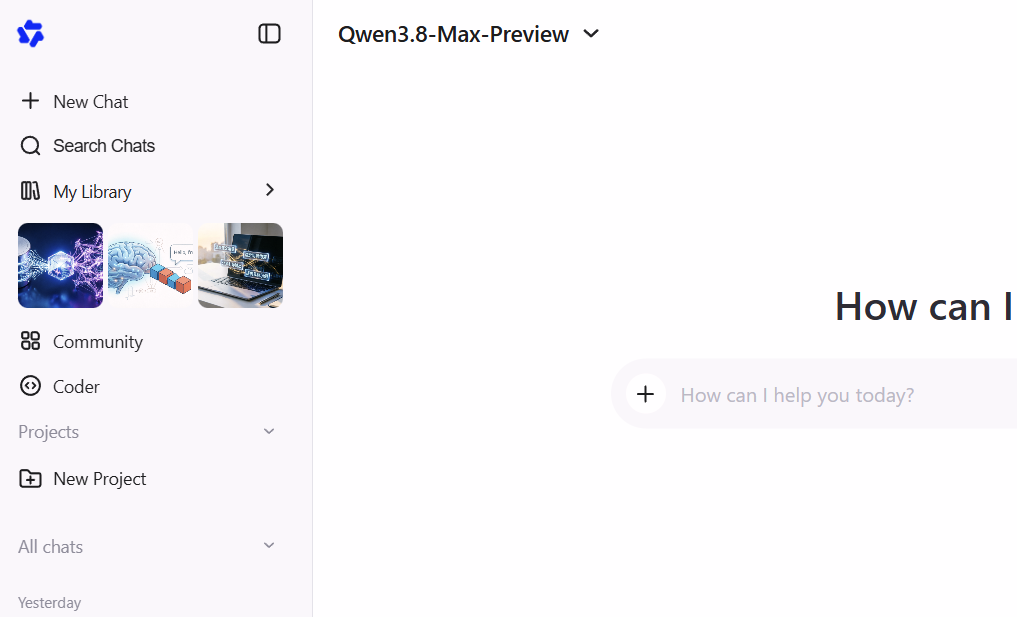
On July 19, 2026, Alibaba previewed Qwen3.8-Max-Preview, a new flagship multimodal AI model with a staggering 2.4 trillion total parameters.
The announcement is significant for more than just the size of the model. Alibaba says Qwen3.8 is its first multimodal model to cross the 1 trillion-parameter threshold, while also promising that the model will eventually be released with open weights.
If Alibaba follows through, Qwen3.8 could become one of the most important open-weight AI releases ever made.
The preview model is already available through Alibaba’s Token Plan, Qoder and QoderWork platforms. However, there is still a major question surrounding the launch: can Qwen3.8 actually deliver the frontier-level performance Alibaba claims?
For now, the answer remains unverified.
What Is Qwen3.8-Max-Preview?
Qwen3.8-Max-Preview is Alibaba’s latest flagship AI model from its Qwen family. It is designed as a large-scale multimodal system capable of working with multiple types of information rather than relying exclusively on text.
The model is built to process:
- Text
- Images
- Videos
- Documents
- Complex data
- Software and code
That multimodal design could make Qwen3.8 particularly useful for tasks that require understanding information across different formats.
For example, a user could theoretically provide a document, a video, a spreadsheet and written instructions in a single workflow. The model could then analyze the information together instead of treating each format as a separate task.
Alibaba has positioned Qwen3.8 as a major step forward from its previous flagship model, Qwen3.7-Max. The company says the new model is significantly better at complex, long-running tasks involving software development, data analysis, office productivity and multiple AI agents.
However, it is important to separate official claims from independently verified performance. At the time of writing, independent third-party benchmark results for Qwen3.8-Max-Preview have not yet been published.
Qwen3.8 Has 2.4 Trillion Parameters
The headline specification of Qwen3.8 is its enormous parameter count.
Alibaba says the model contains 2.4 trillion total parameters.
Parameters are the numerical values an AI model learns during training. They help the model recognize patterns, understand language, process information and generate responses. Generally speaking, a larger model can have greater capacity, although parameter count alone does not guarantee better performance.
The 2.4 trillion figure puts Qwen3.8 among the largest publicly disclosed AI models in the world.
At present, it is positioned behind Moonshot AI’s 2.8 trillion-parameter Kimi K3 in total size. However, Qwen3.8’s planned open-weight release could make it especially important for developers and researchers.
The model’s architecture is believed to use a sparse Mixture-of-Experts, or MoE, design. Alibaba has not yet publicly revealed the full configuration, including the number of experts or how many parameters are active for each individual request.
That missing information is important.
A model can have trillions of total parameters but use only a fraction of them for each token or task. This is one of the main advantages of sparse MoE systems: they can offer a massive overall model capacity without requiring every parameter to be activated for every calculation.
For comparison, the total parameter number and the active parameter count can tell very different stories about the actual computational requirements of a model.
Until Alibaba publishes more technical details, the precise efficiency and hardware requirements of Qwen3.8 remain unclear.
The Model Is Multimodal From the Ground Up
One of the most interesting aspects of Qwen3.8 is its multimodal architecture.
Alibaba describes the system as being capable of natively handling text, images, videos and documents. That could allow it to operate more like a general-purpose AI system rather than a traditional text-focused chatbot.
A multimodal model could be used for tasks such as:
Image Understanding
Users could upload images and ask the model to identify objects, explain diagrams, extract information or analyze visual details.
Video Analysis
Video understanding is becoming increasingly important for AI applications. A model capable of processing video could summarize long recordings, analyze events, understand tutorials or extract important moments.
Document Intelligence
Businesses and professionals increasingly work with contracts, reports, spreadsheets, presentations and technical documents. A multimodal AI system could analyze these files together and answer questions based on their contents.
Software Development
Alibaba has specifically highlighted improvements in complex software engineering and full-stack development. Developers could use the model to understand codebases, design applications, debug problems and coordinate multiple steps in a development workflow.
Professional Workflows
The company also claims improvements in office productivity, data analysis and long-running multi-agent tasks.
This is an important direction for AI development. The next generation of models will likely be judged not only by how well they answer individual questions but also by how effectively they complete entire workflows.
Alibaba Claims Qwen3.8 Is Second Only to Fable 5
Alibaba’s most aggressive claim is related to performance.
The company says Qwen3.8 is comparable to leading frontier AI models and is second only to Anthropic’s Fable 5.
That claim immediately places the model in the top tier of the global AI race.
However, the statement should currently be viewed as a vendor claim rather than an independently confirmed ranking.
No comprehensive third-party benchmark has yet demonstrated that Qwen3.8 is actually the second-best AI model available. Independent evaluations will be essential for determining how it compares with models from companies such as Anthropic, OpenAI, Google and other major AI laboratories.
The absence of public benchmarks does not mean Alibaba’s claims are false. It simply means that the wider AI community does not yet have enough independently reproducible data to confirm them.
This distinction is especially important in the current AI industry, where model companies frequently promote their newest systems using internal testing results.
The real test will come when researchers and developers can evaluate Qwen3.8 across a broad range of tasks, including:
- Advanced reasoning
- Coding
- Mathematics
- Long-context understanding
- Multimodal analysis
- Agentic workflows
- Data analysis
- Instruction following
- Real-world software development
Until then, Qwen3.8’s exact position in the AI rankings remains an open question.
The Open-Weight Promise Could Be the Biggest Story
The most important part of the Qwen3.8 announcement may not be the 2.4 trillion parameter count.
It could be the promise of open weights.
Alibaba says Qwen3.8 will be released with open weights soon.
If that happens, developers and researchers could potentially download and run the model themselves, depending on the final release terms and hardware requirements.
This would represent a major change from some of Alibaba’s recent Max-tier releases, which remained closed.
An open-weight release of a 2.4 trillion-parameter multimodal model would be extremely significant.
Developers could potentially:
- Run the model on their own infrastructure
- Customize it for specialized applications
- Fine-tune it for specific industries
- Build private AI systems
- Research its architecture
- Integrate it into enterprise workflows
- Reduce reliance on a single hosted API provider
Of course, the practical reality will depend heavily on the final model size, quantization options, licensing terms and hardware requirements.
A 2.4 trillion-parameter model is not something most individuals will be able to run on a typical consumer laptop. Even if the model uses sparse activation, deployment at this scale could require substantial computing infrastructure.
Still, open weights could allow cloud providers, research organizations and AI developers to create optimized versions.
If Alibaba delivers the promised release, Qwen3.8 could become one of the most ambitious open-weight AI projects ever released.
The timing is also notable. Moonshot AI’s Kimi K3 recently pushed the open-weight model market to a new scale, and Alibaba’s Qwen3.8 announcement suggests that China’s AI industry is rapidly competing at the multi-trillion-parameter level.
How to Try Qwen3.8-Max-Preview
Alibaba has already made the preview version available through several of its platforms.
Alibaba Token Plan
Qwen3.8-Max-Preview is available through Alibaba’s Token Plan ecosystem. The model was introduced with promotional access designed to encourage early testing.
The launch also includes integration with different subscription tiers and access options.
Qoder
Qoder is Alibaba’s AI-powered coding platform.
Qwen3.8-Max-Preview is available through Qoder for developers working on software development and full-stack projects.
This could be one of the most practical ways to test the model because coding is one of the areas where Alibaba claims significant improvements.
QoderWork
The model is also available through QoderWork, Alibaba’s productivity and agent workflow platform.
This is aimed at more complex professional tasks involving multiple steps and AI agents.
According to Alibaba, Qwen3.8 is particularly strong at tasks that require long-term planning and execution rather than simply answering a single prompt.
The model has also begun appearing across Alibaba’s Qwen ecosystem, including web and PC access in some markets.
Qwen3.8 vs Kimi K3: Which Model Is Bigger?
The launch of Qwen3.8 comes at a particularly interesting moment because Moonshot AI recently introduced Kimi K3.
Here is how the two models currently compare based on publicly disclosed information:
| Feature | Qwen3.8-Max-Preview | Kimi K3 |
|---|---|---|
| Developer | Alibaba Qwen | Moonshot AI |
| Total Parameters | 2.4 trillion | 2.8 trillion |
| Multimodal | Yes | Model-specific capabilities |
| Open Weights | Promised | Released/open-weight positioning |
| Current Status | Preview | Public release |
| Independent Benchmarks | Not yet available | Wider testing developing |
By total parameter count, Kimi K3 is larger.
However, raw parameter count is only one part of the equation. Architecture, training data, active parameters, reasoning capabilities, inference efficiency and post-training can all have a major impact on real-world performance.
Qwen3.8 could potentially be more useful for certain tasks even though it has fewer total parameters.
The most important comparison will eventually come from independent testing rather than specifications alone.
Why the Qwen3.8 Launch Matters for the AI Industry
The Qwen3.8 announcement reflects several major trends in artificial intelligence.
1. AI Models Are Getting Much Larger
The industry is rapidly moving beyond the billion-parameter era.
With models such as Kimi K3 and Qwen3.8 reaching multi-trillion-parameter scales, the focus is shifting toward massive distributed training systems and sparse architectures.
2. Open Weights Are Becoming More Competitive
The biggest AI models have traditionally been controlled by a small number of companies.
If Qwen3.8 is released with open weights, developers will have access to a model with extraordinary scale outside the traditional closed API ecosystem.
3. Multimodal AI Is Becoming the Standard
Future AI systems will increasingly understand text, images, video, audio and documents together.
Qwen3.8’s design reflects this direction.
4. AI Companies Are Competing on Price
Alibaba’s early promotional access at a fraction of standard pricing could also be strategically important.
If a powerful frontier-class model can be offered at significantly lower costs, it could place pressure on competing AI providers.
For developers, lower costs could make advanced AI more accessible.
5. Agentic Workflows Are Becoming More Important
The emphasis on long-running tasks, full-stack development, data analysis and multi-agent workflows shows where the industry is heading.
The future of AI may not be about asking a chatbot one question at a time.
Instead, users may increasingly delegate complete projects to AI systems.
The Biggest Questions About Qwen3.8
Despite the excitement around the launch, several important questions remain unanswered.
What Is the Active Parameter Count?
Alibaba has disclosed the total parameter count but has not yet detailed the exact MoE configuration.
The active parameter count will help developers understand how computationally expensive the model is to run.
How Good Is It in Independent Testing?
This is perhaps the biggest question.
Alibaba’s claim that the model is second only to Fable 5 is ambitious. Independent benchmarks will determine whether that claim holds up.
Will Alibaba Actually Release the Open Weights?
The open-weight promise is extremely important.
However, developers will need to wait for the actual release before they can evaluate the model’s licensing, hardware requirements and practical usability.
How Large Will the Download Be?
A 2.4 trillion-parameter model could require massive storage and computing resources.
Quantized versions could make deployment more accessible, but the final technical details are not yet known.
Final Verdict: A Huge AI Announcement, But the Real Test Is Still Ahead
Qwen3.8-Max-Preview is one of the biggest AI model announcements of 2026 so far.
With 2.4 trillion parameters, native multimodal capabilities and a promised open-weight release, Alibaba is making an aggressive statement about the future of the Qwen ecosystem and China’s position in the global AI race.
The model is particularly interesting because it combines three major trends: enormous scale, multimodal intelligence and the possibility of open access.
However, the industry’s excitement should be balanced with patience.
The model’s claimed position behind only Fable 5 has not yet been independently verified. Its active parameter count, full architecture and final open-weight release details also remain unclear.
For now, Qwen3.8-Max-Preview is best understood as a powerful preview with enormous potential rather than a definitively proven leader.
If Alibaba delivers the promised open-weight version and independent testing confirms its frontier-level performance, Qwen3.8 could become a landmark release for open AI.
The next few weeks may reveal whether this is simply another massive model announcement—or the beginning of a major shift in the AI power balance.
Frequently Asked Questions
What is Qwen3.8-Max-Preview?
Qwen3.8-Max-Preview is Alibaba’s latest flagship multimodal AI model with 2.4 trillion total parameters. It is designed to process text, images, videos and documents.
How many parameters does Qwen3.8 have?
Alibaba says Qwen3.8 has 2.4 trillion total parameters. The exact number of active parameters has not yet been publicly disclosed.
Is Qwen3.8 open source?
Alibaba has promised to release Qwen3.8 with open weights soon. The final release terms and licensing details are still awaited.
Is Qwen3.8 better than Kimi K3?
It is too early to say. Kimi K3 has more total parameters at 2.8 trillion, while Qwen3.8 is currently a preview model. Independent benchmarks are needed for a reliable comparison.
What does Alibaba claim about Qwen3.8’s performance?
Alibaba says Qwen3.8 is comparable to leading frontier AI models and second only to Anthropic’s Fable 5. This claim has not yet been independently verified.
Where can I try Qwen3.8-Max-Preview?
The preview is available through Alibaba’s Token Plan, Qoder and QoderWork platforms, with availability depending on the specific service and region.
Sources: MLQ AI report on Qwen3.8 · South China Morning Post coverage · KIE AI technical overview · IT之家 launch coverage